
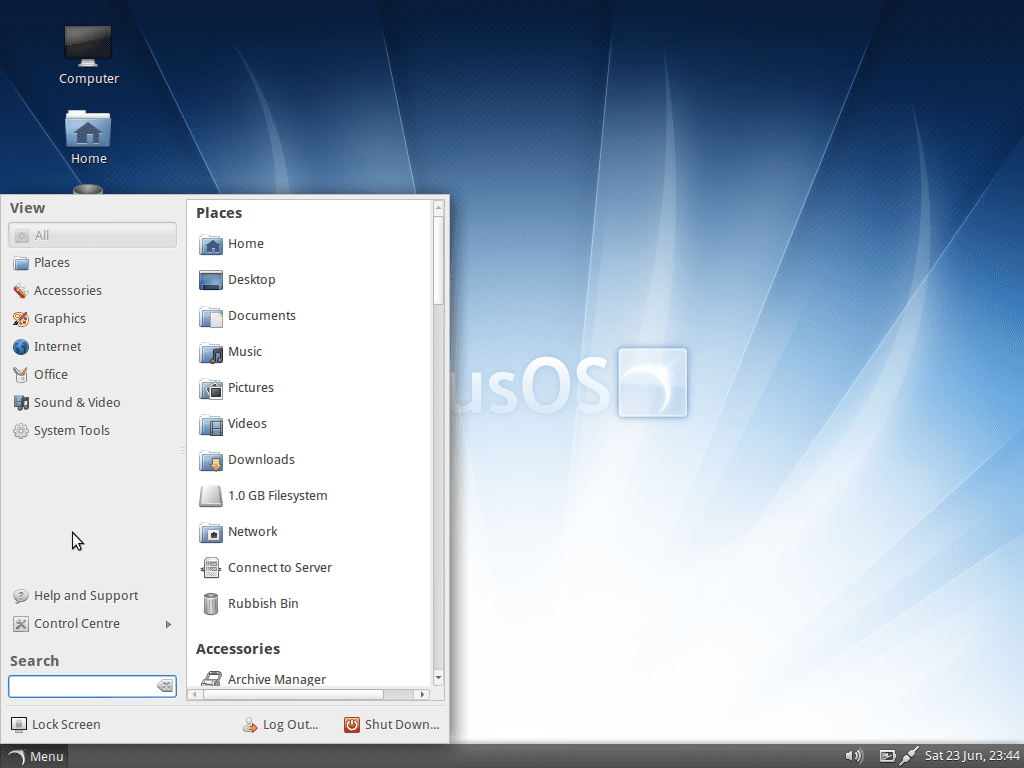
It would be interesting to conduct a survey on the Linux Mint forums , especially in the LMDE section , to see what its users think of SolusOS , a distribution that is about to become the distro of the moment, given the enormous growth it is experiencing, for example, on Distrowatch , due to the interest it is generating in the GNU/Linux Community.
And where does so much interest come from? Well, I think that everyone, or at least most of us, know the answer to that question. To understand this a bit, first some history:
With the arrival of Gnome 3 , many users were delighted with the new philosophy of Gnome Shell , but just as many were left with the nostalgia of having their Desktop Environment as in the past, with the ease and simplicity of Gnome 2.
More than just ease of use, GNOME 2 allowed us to configure our desktop layout almost exactly to our liking. This way, users could have an appearance similar to Windows , macOS , or any other GNU/Linux desktop environment . Let's review some of the options we could configure with GNOME 2 :
- One panel at the bottom / top, or both.
- It had a good number of applets, which you could move to wherever you wanted, add or delete it very easily.
- We could have, or not, (if we wanted) icons on the Desktop.
- Applications menu (some of us still prefer it).
In short, these are things that aren't impossible to achieve with Gnome Shell , but modifying them can be cumbersome, or we have to use extensions. Besides the appearance, Gnome Shell also changed the way we work and interact with the desktop, another reason why it received a barrage of criticism in many corners of the internet.
But all was not lost; users who did not have the option (due to limited hardware resources) or did not want to use the Shell , could resort to Gnome 's FallBack mode , which, in truth, although it bears some resemblance to Gnome 2 , is much less usable.
Ubuntu noticed this and tackled the issue head-on, deciding to improve the appearance of Gnome Classic/Fallback , and they almost succeeded. I say "almost" because the only theme that looks good is Ambiance/Radiance , at least as far as I could see. But for me, it wasn't enough; there were still many glaring details that I didn't like.
That's where SolusOS comes in . A distribution that inherits all the good qualities of Debian: stable, fast, and secure. But it adds an advantage over the base distro: updated packages and beautifully crafted artwork . What more could the average GNU/Linux user ask for?
To that end, Ikey Doherty released the first version based on Debian Squeeze , using Gnome 2 by default . But he realized something important: neither Gnome 2 (in terms of support) nor Debian Squeeze would last forever . Our friend got to work, and the first beta of SolusOS 2 is almost ready . Using Debian Testing with Gnome Classic , it attempts to replicate the look and feel of Gnome 2. And he succeeded!
Ikey has had to create patches for gnome-panel , including one that eliminates the need to press the Alt key to access options and applets. With a team of no more than four people, SolusOS is progressing rapidly, incorporating new features, improving the artwork, but above all, listening to its users. I've personally had several discussions with Ikey via Google+ or the SolusOS IRC channel , and he's shown me that he's not blind to what's being said (or blind to it, in this case).
SolusOS gives Gnome 2 users back everything Gnome Shell took away, and best of all, it uses the core technology of Gnome 3.4 . Projects like MATE seem pointless to me compared to the work done on this distribution, as they unintentionally become obsolete. In short: SolusOS simply gives us Gnome 3 with the look of Gnome 2.
Many users who had to switch to Xfce in search of alternatives will appreciate all this work if the mouse doesn't completely win them over. I'm even sure that Linus Torvalds himself would use SolusOS if it weren't based on Debian . I mention Xfce because even I'm having second thoughts about switching to SolusOS.