
LPIC: What must we learn to be a Linux expert?
This month marks one year since the release of version 5.0 of the well-known international certification for IT personnel specialized in the administration of Linux systems, known as "LPIC", letters from the initials of his name in English (Linux Professional Institute Certification). The Linux Professional Institute (Linux Professional Institute - LPI) periodically (every three years) update your certification exams. And the last time, it was in 2018, when it went from version 4.0 to version 5.0.
This new and current version (5.0) is specially designed to cover all relevant aspects of "systemd". All its content has been updated and in other cases redesigned to cover modern topics, such as the use of new packages and / or commands, such as "Iproute2" and "networkmanager" instead of legacy networking tools. And in other cases, cover new topics like "The use of Linux in Virtual Machines (VM) and in the Cloud (Cloud)". And finally, exclude topics that are no longer so vital or important as "SQL" and "Quotas" file system.
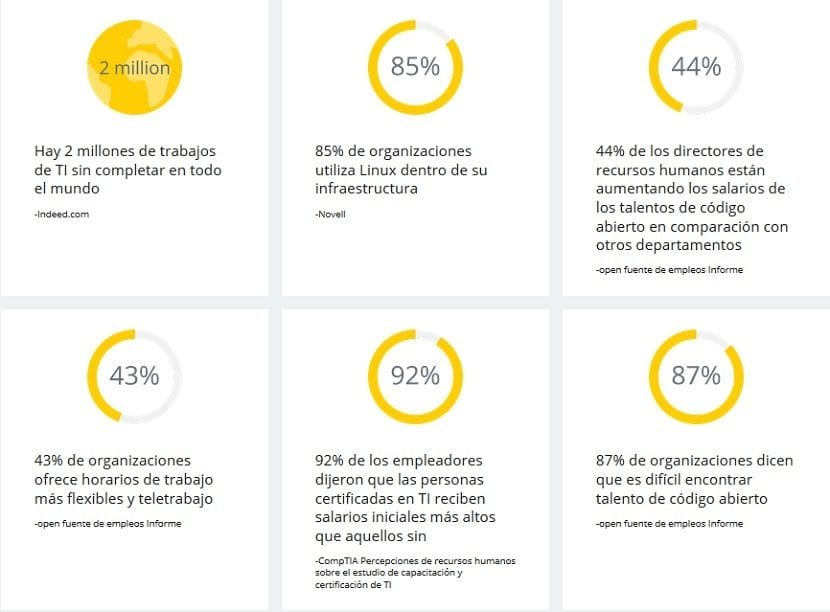
International "LPIC" certifications have long been in demand in the IT area, so that today they are constituted as a guarantee or endorsement to get an excellent job, in any country and organization, due to the demand for IT professionals in this sector, that is, the area of Free Operating Systems under Linux.
Un Sysadmin o DevOps, current or future, who works with Linux should focus on performing the most internationally recognized certifications, and precisely The LPIC certification obtained by taking the exams of the LPI (Linux Professional Institute) or those of the Linux Foundation (Linux Foundation), is ideal for this objective.
What is the LPI?
According to his official page in spanish:
«LPI is a non-profit organization. LPI is the global certification standard and professional support organization for open source professionals. With over 600,000 exams delivered, it is the first and largest Linux neutral and open source certification provider in the world. LPI has certified professionals in over 180 countries, provides exams in 9 languages, and has hundreds of training partners.
And its purpose is:
"... enable economic and creative opportunities for all by making open source knowledge and skills certification universally accessible."
LPI as an organization was formally constituted in October 1999, with a headquarters near the city of Toronto, in Canada. And to this day recognized worldwide as the first organization to promote and support the use of Linux, Open Source and Free Software.
And it is always open without major limitations to new collaborators, sponsors and ideas in order to promote and certify the essential capabilities in Linux and Open Source by conducting highly comprehensive, high-quality exams and independent of any Linux distribution.
What is the LPIC?
The international certifications "LPIC" have been designed to certify (validate) the training and management of IT professionals using the Linux Operating System and tools associated with it. In addition, they have been designed so that their content is independent of any Linux distribution, and follows the rules and parameters of "Linux Standard Base" and other related standards.
"The LPIC's pension is based on conducting surveys to establish a level of certification based on the job to be performed using Psychometric processes to ensure the relevance and quality of the certification."
The first certifications began to be issued in April 2009, making clear the LPI's commitment to developing a global standard for Linux certification. Currently LPI maintains the LPICs in continuous review and update to adapt their content to the rapid evolution of the IT area and the Linux world. Maintaining continuous synergy with the industry of the sector to determine the ideal profiles of the Linux professional, and thus keep the contents current.
What are the current LPI certifications taught?
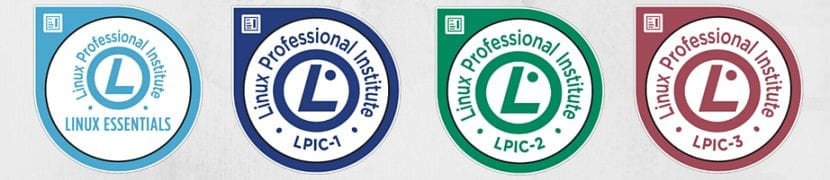
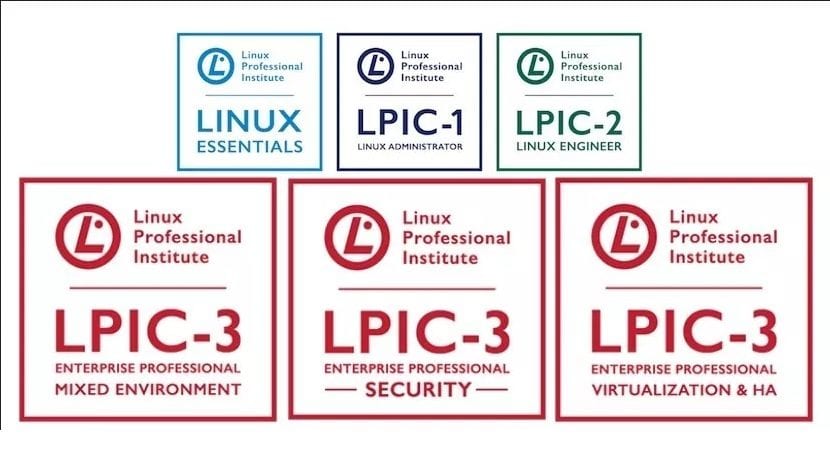
All the current certifications issued by the LPI are:
LPI Linux Essentials
Designed for new Linux users, enables the basic use of the System Terminal (Console) and the elementary understanding of the processes, programs (commands / packages) and components of the Linux Operating System. The certification does not expire, that is, it lasts for a lifetime, and to be completed it does not need any prior requirements. It is ideal for starting the training of average users and technical personnel in training.
LPIC-1
Designed to accredit your participants as Linux Administrator. It also does not require prerequisites, but the certification is valid only for 5 years, after being approved, so it must be renewed. It covers the basic skills for the Linux professional that are common to all Linux distributions.
The LPIC-1 certifies that the knowledge possessed on the system commands, their installation, commissioning, basic configuration, and on how to form and manage a Linux network, that is, on the real administration in a Linux environment, are solid and enough to work as a Linux SysAdmin.
LPIC-2
Designed to accredit its participants as Linux Engineers. It requires having the LPIC-1 certification active and it is also valid only for 5 years, after it has been approved, so it must be renewed. It covers the necessary and essential skills for a Linux professional to manage mixed small and medium networks.
The LPIC-2 certifies that the knowledge possessed about Linux is necessary to carry out advanced administration of the Linux system, including Linux kernel management, startup, and total system maintenance. In addition to tasks, such as network management, authentication and system security, management of Firewalls and VPNs, installation and configuration of fundamental network services (DHCP, DNS, SSH, Web, FTP, NFS, Samba, Email, among others.
LPIC-3
Designed to accredit its participants as an Advanced Linux Engineer. It requires having the LPIC-2 certification active and it is also valid only for 5 years, after being approved, so it must be renewed. The LPIC-3 is divided into several certifications that can be done separately, without depending on each other, since they are specializations.
Each of these covers aspects such as: The ability to integrate Linux services in a mixed business environment, the ability to harden and protect Linux servers, services and networks in a company, and finally, the ability to plan and implement virtualization and high availability configurations on Linux-based systems.
LPIC-DTE
This new and last certification created known as LPIC-DTE (LPI DevOps Tools Engineer) is specially designed for those interested or immersed in software engineering. It does not require prerequisites to be taken, but the ideal is to take it with development certifications, or good knowledge of certain programming languages or at least the LPIC-1.
The LPIC-3 is for now, the final stage of LPI's multi-level professional certification program. Therefore, it is designed for the Linux professional who performs at an enterprise level and requires the highest level of professional Linux certification possible.
Other existing international certifications
On the market there are other existing international certifications that it is good to know and perform, as far as possible. Among them we can mention:
- CompTIA Linux +
- LFCS (Linux Foundation Certified Sysadmin)
- LFCE (Linux Foundation Certified Engineer)
There are other recognized international certifications, but they are usually associated with specific organizations or distributions, such as: Red Hat y SUSE.
Conclusion
For those passionate or IT professionals who use or manage Linux Operating Systems, LPI certifications are an ideal complement in our professional, professional and personal career, since it trains us and endorses our skills on it.
Furthermore, the great value of LPICs is in their neutral character with respect to existing Linux distributions. Which enables us as professionals not limited or tied to any specific technology, thus empowering us for the ideal management based on multiple open source technologies, which in turn benefits us above all at the labor level for the good development on real work environments.
So much trouble to put links to the sites on which they post ...?
Manga of assholes, the only thing they generate is annoying readers who have to be googling and looking outside the post for more information about a post they publish.
Greetings, dear reader. Many times we do not place too many links in the publications so that they are not penalized by the search engines for excess links. The most recommended is no more than 5 links (between external and internal links), and this article was already at that limit. Postscript: You should improve the way you communicate with others.
Out of topic:
Hello, it is ridiculous that there is a recommendation on the number of links that a web page has, precisely the HTML was created to link content and avoid resorting to an index.
The search engines appeared thanks to the characteristics of HTML, if they now penalize you for putting a number of links, it would mean that they are extorting you to go against the capabilities of HTML.
regards
Maintaining the least number of internal and external links both on a main page and in a publication (article) is essential for their performance and SEO ranking. Since currently a content with many links can be cataloged as "Link Farm" (Link Farm), which is currently defined as a practice that is part of Black Hat SEO and that, currently, is in disuse due to problems that causes in terms of positioning (SEO). However, you can put infinite internal and external links if the correct use of the "follow", "nofollow" tags is made.
And also if they stopped being so assholes to put generic links to their own site ...
Thank you for your contributions and comments. Although I don't see the need to use profanity to establish your respectable point of view in our conversation.
Do not be overwhelmed by this cretin, you have a very cool blog and for the vast majority of people such a search is not a bother at all.
Thank you for your positive comment and support, Taraak.
Being well born is being grateful and I would not like to leave my mother's ** HARD ** job on the ground 🙂