

Red Hat Inc. is retiring its legendary "Shadowman" logo after nearly 20 years as it nears closing on its proposed $ 34 billion acquisition by IBM Corp.
Out of the shadows and about to be received by IBM, what shocked the tech world when he announced his plans to buy Red Hat late last year in what will be your biggest acquisition.
The acquisition will be finalized at the end of this year And while IBM intends to keep Red Hat as a separate business identity, many analysts believe it should give the company a better chance of taking on rivals such as Amazon Web Services Inc., Microsoft Corp. and Google LLC.
Red Hat boasts new logo after two decades
The business software company debuted their new logo this week, saying that six of his employees, including a senior executive, already have him tattooed.
They also comment that getting a Red Hat logo tattoo is not an unusual part of the culture of the open source software company. In fact, there are 17 employees who sport tattoos of the original logo.
Revamped logo suggests Red Hat is looking to update its image as you prepare for the next leg of your journey.
In a blog post, Tim Yeaton, Executive Vice President of Corporate Marketing from Red Hat, He said one of the reasons for the change is that most people didn't know what the old Shadowman was supposed to represent.
Actually, he's supposed to be some kind of heroic spy, But the company's investigation showed that, in fact, many people considered it "secret, sinister or cunning."
"Brand's team and I were heartbroken," Yeaton wrote. "These words could not have been further from my deeply held impressions of Red Hat, which I had formed long before joining the company."
The old "Shadowman" logo was too "sinister," Red Hat said.
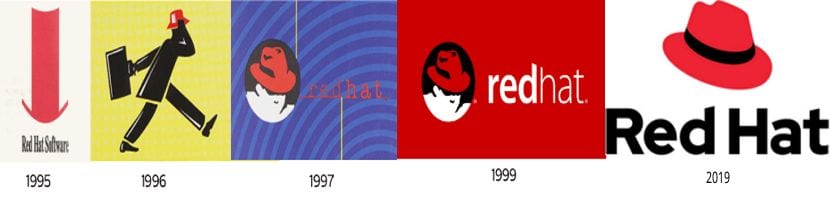
And so, Red Hat decided, as one of the world's leading open source software companies, launch what he called the "Open Brand Project", That effectively opens up the new logo design for your employees.
Open Brand Project, in search of the new design
Open Brand Projectt led to the creation of the «Tattoo Team», which was a committee of Red Hat employees who had already tattooed the old logo on their bodies and were tasked with creating a new design.
“The new logo reflects Red Hat's evolution from a 'skinny boot' in data centers with boxed copies of a Linux-based operating system, to the world's leading provider of open source solutions for enterprise hybrid cloud environments.
With the new logo, "we've really stepped out of the shadows," Yeaton said.
Consuelo Madrigal, Red Hat Latin America brand manager, is one of the employees who got a tattoo of the new logo.
She says she had never been a "tattoo freak" but decided to get the new Red Hat logo tattooed after participating in the Open Brand Project, which developed the logo, for two years.
"Culturally, this is not just the logo for us Red Hatters," Madrigal said. “It's our culture, it's our way of doing things, and I learned a lot from that, and I loved it throughout the trip. It is a reminder of what we can do when we try new things.
Finally, the result, what could happen if we all do it together. I am happy with everything that is happening.
So Yeaton wants people who have never heard of Red Hat seeing the new logo instantly have an idea of what the company it is: dynamic, reliable, innovative, open.
The new Red Hat logo has a softer vibe, more in keeping with its modern persona and more effective in communication.
Excellent change….