
Surfing the Internet one day I found a program to graphically monitor the processes, network, memory and other interesting things of a PC. Well I thought it was very good, so I decided to share it with all of you and it is about Netdata.
What is NetData?
Netdata is an open-source tool that allows us to monitor a computer's performance in real time . It provides unparalleled, real-time insights into everything happening on the running system (including applications such as web or database servers) using modern, interactive web dashboards.
Netdata is fast and efficient, designed to run continuously on all systems, without interrupting their functions.
How to install NetData?
Next we are going to give the steps to install NetData on Debian, but it can also be done on Arch, Gentoo, CentOS, Fedora and Suse.
Remember to run the commands with root permissions.
# apt-get install zlib1g-dev uuid-dev libmnl-dev gcc make git autoconf # apt-get install autoconf-archive autogen automake pkg-config curl
Now we will clone the program from its repository on Github.
-
#git clone https://github.com/firehol/netdata.git --depth = 1
We move to your directory
#CD Network data
We start the installer
#. / netdata-installer.sh Or you can do it with. #sh netdata-installer.sh
If no error appears up to here, the whole process is fine, now we will make Netdata start as a daemon, to manage it with systemctl.
-
# kill the netdata process
#killall netdata

# copy netdata.service to systemd
#cp system / netdata.service / etc / systemd / system /

# Reload the demon
#systemctl daemon-reload

# Enable Netdata
#systemctl enable Network data

# Start netdata
#service netdata start
How to use Netdata?
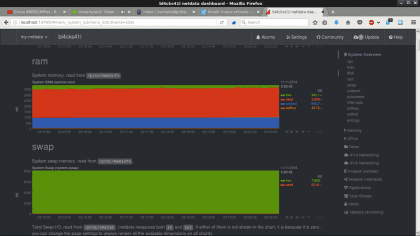
Once we have Netdata Installed, now we are going to work with it. We open a browser window and place this http://localhost:19999
And they will already have Netdata monitoring everything the system does.

Well that has been all I hope you liked it and see you soon. I just translated a bit and synthesized the installation.