Anyone can be the victim of a catastrophic tragedy, or world crisis situation. But in the same way that you can be a victim, you are a witness to all events, and your voice becomes a powerful tool that can collaborate with society. Having all the testimonies of each person, and being able to process that information in real time for a greater good, could mean something great. This is how Ushahidi begins.
ushahidi ("testimony" or «witness»In Swahili), is a platform for citizen monitoring of events of particular importance in situations of crisis, emergency or tragedy within a region. Inside Ushahidi, all geolocated citizen information about tasks, news and any event related to the situation in question is agglomerated, processed and organized.

The idea for Ushahidi emerged in Africa, specifically in Kenya in 2007, after the controversial re-election of President Mwai Kibaki. After the opposition accused the electoral process of fraud, a series of violent acts were unleashed that could not be documented due to the lack of informative references and the great censorship of the government to the media.
Thus, at the beginning of 2008, bloggers and programmers came together in an effort to create Ushahidi, a low-cost website that was capable of collecting information from all its inhabitants and being an informative window on the crisis situation in the country.
ushahidi is based on the crowdsourcing, Is open source, developed mainly in PHP under the license LPGL, created for any person or organization to establish their own way of processing and displaying information related to a situation of collective importance.
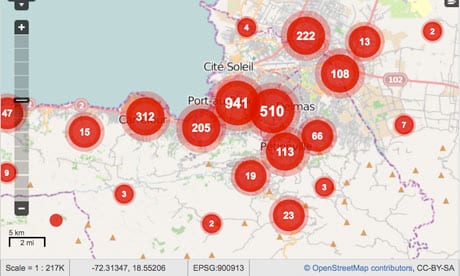
The collection of information is directly supported by social activism and citizen journalism, where each “witness” is able to send their information through SMS, email, Twitter or the form incorporated in the websites. These citizen reports are received by Ushahidi staff, where the information is geocoded and viewed with the support of Google Maps, Bing Maps and OpenStreetMap. The system works with swiftriver, a tool that allows filtering and verifying in real time all the information generated online, to locate the most valuable information as a priority and discard duplicates that arrive through different channels. Once it is approved, it is displayed on a map, defined by red dots.

Currently, ushahidi It is one of the main crowdsourcing platforms, and the participation of this website in large events worldwide is numerous, ranging from monitoring the elections in Mexico, India, Argentina and Venezuela, to tracking viruses such as H1N1.